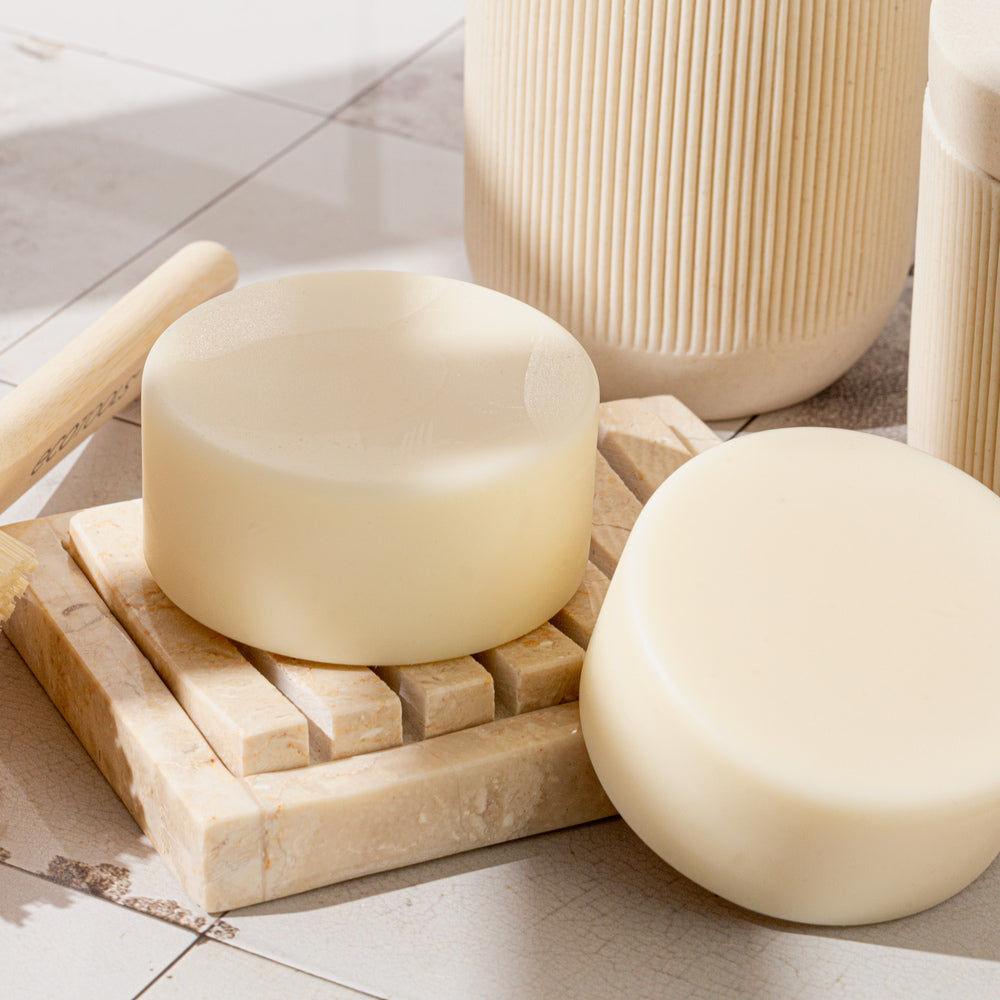
Wholesale Pricing Is Laying Your Foundation
This is the first of a three part series on how to determine pricing for your bath and body products. This first post will discuss wholesale pricing, while the second and third posts will discuss retail pricing and craft show pricing, respectively.
Correct wholesale pricing is essential when selling to stores. Retailers depend on wholesalers to know their margins and bottom line. Wholesale pricing really is like laying your foundation
Retailers take wholesale prices and mark them up at least 200%. This is known as "keystone." If a soap or even by 2.2 (to offset shipping of their order or to offset their overhead). Your $3.00 soap is now sitting on a retail shelf with a price tag of $6.00 to $6.60.
Why take the time to get it right? Without determining profitable wholesale markups, it won't be long before you start to notice there isn't enough money to keep your business running. This is a dangerous trap to fall into. Try telling retailers that prices were incorrectly set and that they need to pay 20 percent more on future orders. That would fly like a lead balloon, as word spreads quickly among retailers and you wouldn't be losing just one customer.
Pricing is one of the most important areas of running a successful business. As much as we have a passion for what we make and do, what's the point if we aren't making a profit to stay in business next year? We want to be in business for years to come, so plan accordingly when it comes to profit margins. The benefits of setting correct wholesale pricing is that there will be no surprises- for you nor for the retailer. Let's take a look at the cost analysis behind pricing. There are four areas of costs you must research:
The easiest way to determine cost of goods is to break down how much it costs to make a batch of your product. If you typically produce 24 bars of soap at a time, add the ingredients and packaging pricing to determine how much it costs to make it. Then divide the total number by 24.
Example:
In the sample equation we will use $0.10 per unit for shipping. The overhead of your business is the ongoing expense to run it. The easy way to determine what goes into overhead is to ask whether it contributes directly to profits. If it doesn't, then typically it goes into overhead. Included in overhead is the business portion of your mortgage or rent for the year along with insurance, electricity, supplies, telephone, heat, repairs, legal fees, advertising, and so on.
The thought process behind including overhead pricing in your products is that each item that you sell must contribute to paying for the necessary cost of running your business (not including labor).
Add up the overhead for one year and divide it by the number of units to be sold in that year. That example below shows the importance of keeping your overhead low. Overhead adds up quickly over the course of 12 months. IN addition to COGs, it's one area for you or your accountant to keep close tabs on throughout the year- not at year-end when it's too late to pull in the reins on spending.
Example:
Remember to determine labor per product. Labor is based on time, so calculate how long it takes for you to produce a batch of product from start (prep) to finish (through cleanup and packaging/ labeling).
For example, a production run of 100 bars of soaps takes five hours from start time to last bar wrapped and labeled. At $10/ hour, labor totals $50 for 100 bars. Divide $50 by 100 and the labor cost per bar of soap is $0.50 per bar.
Again, this is an area that can be an eye-opener if you haven't previously calculated your labor costs. Some products require very little labor, while others are very labor-intensive.
Remember to calculate for each product that you sell (soaps, scrubs, creams. etc.) Now that you've put your blood, sweat and tears into determining your COGs, Shipping, Labor and Overhead, it's time to put numbers to work.
Here is one formula to help you determine your costs:
(Cost of Goods + Shipping + Overhead) = Cost
Simply multiply your cost times two to start with your wholesale price minimum. Remember, this is starting point and you can pad your wholesale price if your target market will pay more.
Cost x 2 + Labor = Wholesale Price (minimum)
This is an example based on the cost of a 4 oz. melt and pour soap bar:
Here is an easier formula to help you determine your costs. If you are a startup, and aren't sure of your overhead prices, simply figure your wholesale price based on this formula:
(Cost of Goods + Shipping x 3) = Wholesale
Or
(Cost of Goods +Shipping x 3.5) = Wholesale
Remember that these formulas are simply helpful guidelines. It's helpful to know that this is the minimum price for wholesale. You can always mark up your prices further. Take your target market and the perceived value of your product into consideration when it comes to determining wholesale price. Determining costs and putting pen to paper can definitely be a tedious task. But as we've discussed company and one that is not. Don't run your business in the dark or into the ground. Don't be afraid to shine some light on where your company stands in regards to product profitability.
Correct wholesale pricing is essential when selling to stores. Retailers depend on wholesalers to know their margins and bottom line. Wholesale pricing really is like laying your foundation
Retailers take wholesale prices and mark them up at least 200%. This is known as "keystone." If a soap or even by 2.2 (to offset shipping of their order or to offset their overhead). Your $3.00 soap is now sitting on a retail shelf with a price tag of $6.00 to $6.60.
Why take the time to get it right? Without determining profitable wholesale markups, it won't be long before you start to notice there isn't enough money to keep your business running. This is a dangerous trap to fall into. Try telling retailers that prices were incorrectly set and that they need to pay 20 percent more on future orders. That would fly like a lead balloon, as word spreads quickly among retailers and you wouldn't be losing just one customer.
Pricing is one of the most important areas of running a successful business. As much as we have a passion for what we make and do, what's the point if we aren't making a profit to stay in business next year? We want to be in business for years to come, so plan accordingly when it comes to profit margins. The benefits of setting correct wholesale pricing is that there will be no surprises- for you nor for the retailer. Let's take a look at the cost analysis behind pricing. There are four areas of costs you must research:
- Cost of Goods (COGs)
- Overhead (The cost of doing business: heat, electricity, internet, telephone).
- Shipping (Getting COGs to you.)
- Labor
The easiest way to determine cost of goods is to break down how much it costs to make a batch of your product. If you typically produce 24 bars of soap at a time, add the ingredients and packaging pricing to determine how much it costs to make it. Then divide the total number by 24.
Example:
- 16.80 (COGs) for 24, 4 ounce bars of melt and pour soap, wrapped and labeled.
- 16.80 divided by 24 = $0.70 per bar.
In the sample equation we will use $0.10 per unit for shipping. The overhead of your business is the ongoing expense to run it. The easy way to determine what goes into overhead is to ask whether it contributes directly to profits. If it doesn't, then typically it goes into overhead. Included in overhead is the business portion of your mortgage or rent for the year along with insurance, electricity, supplies, telephone, heat, repairs, legal fees, advertising, and so on.
The thought process behind including overhead pricing in your products is that each item that you sell must contribute to paying for the necessary cost of running your business (not including labor).
Add up the overhead for one year and divide it by the number of units to be sold in that year. That example below shows the importance of keeping your overhead low. Overhead adds up quickly over the course of 12 months. IN addition to COGs, it's one area for you or your accountant to keep close tabs on throughout the year- not at year-end when it's too late to pull in the reins on spending.
Example:
- $4,000 divided by 30,000 units sold = $0.13 cost per unit
- $20,000 divided by 30,000 units sold = $0.67 cost per unit.
Remember to determine labor per product. Labor is based on time, so calculate how long it takes for you to produce a batch of product from start (prep) to finish (through cleanup and packaging/ labeling).
For example, a production run of 100 bars of soaps takes five hours from start time to last bar wrapped and labeled. At $10/ hour, labor totals $50 for 100 bars. Divide $50 by 100 and the labor cost per bar of soap is $0.50 per bar.
Again, this is an area that can be an eye-opener if you haven't previously calculated your labor costs. Some products require very little labor, while others are very labor-intensive.
Remember to calculate for each product that you sell (soaps, scrubs, creams. etc.) Now that you've put your blood, sweat and tears into determining your COGs, Shipping, Labor and Overhead, it's time to put numbers to work.
Here is one formula to help you determine your costs:
(Cost of Goods + Shipping + Overhead) = Cost
Simply multiply your cost times two to start with your wholesale price minimum. Remember, this is starting point and you can pad your wholesale price if your target market will pay more.
Cost x 2 + Labor = Wholesale Price (minimum)
This is an example based on the cost of a 4 oz. melt and pour soap bar:
- ($0.70 COG + $0.10 Shipping + Overhead $0.13) = Cost $0.93
- Cost ($0.93) x 2 + Labor/ bar $0.50 = Wholesale $2.36/bar
Here is an easier formula to help you determine your costs. If you are a startup, and aren't sure of your overhead prices, simply figure your wholesale price based on this formula:
(Cost of Goods + Shipping x 3) = Wholesale
Or
(Cost of Goods +Shipping x 3.5) = Wholesale
Remember that these formulas are simply helpful guidelines. It's helpful to know that this is the minimum price for wholesale. You can always mark up your prices further. Take your target market and the perceived value of your product into consideration when it comes to determining wholesale price. Determining costs and putting pen to paper can definitely be a tedious task. But as we've discussed company and one that is not. Don't run your business in the dark or into the ground. Don't be afraid to shine some light on where your company stands in regards to product profitability.