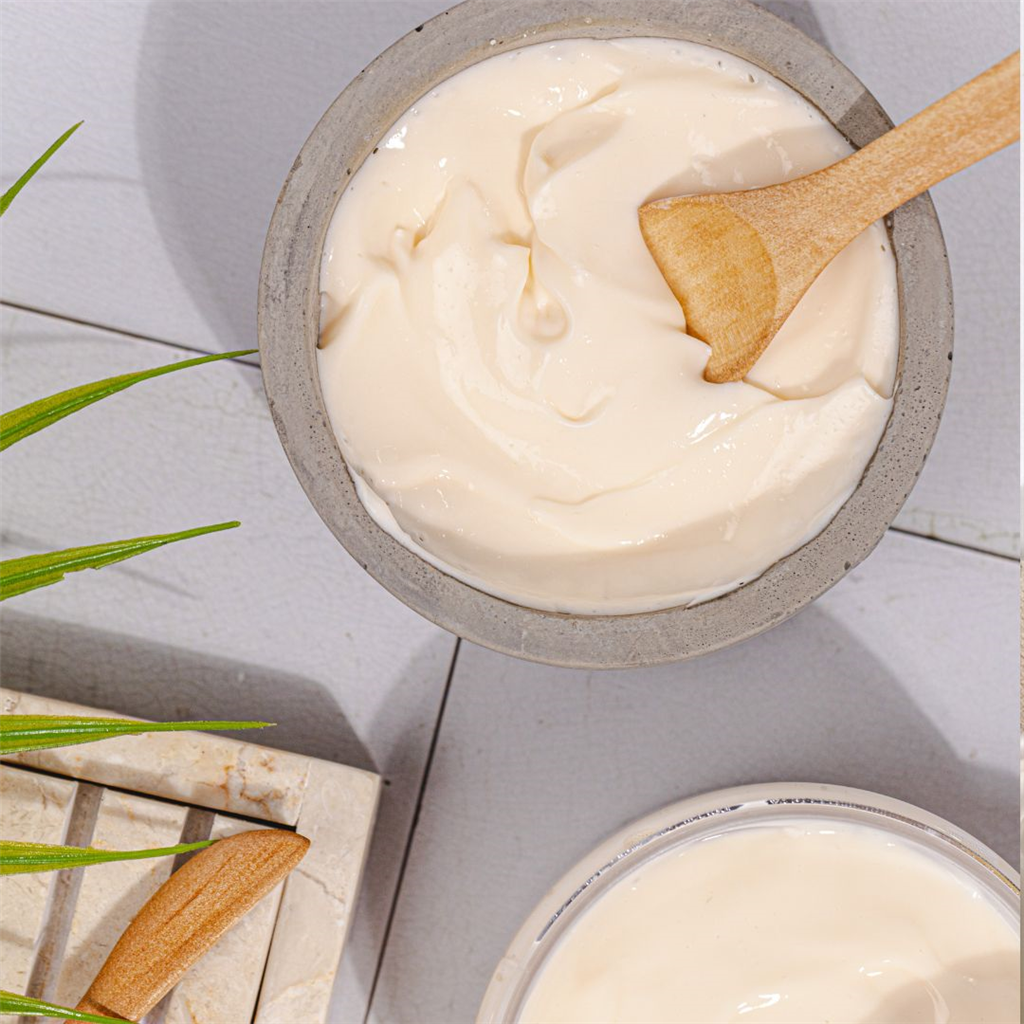
How to Make Whipped Body Butter
Body butter has become increasingly popular thanks to the various benefits it has on your skin. It's an incredible moisturizer that doesn't leave your customers' skin feeling greasy. It can reduce visibility of both wrinkles and stretch marks while also helping fight against rashes, eczema, and other skin conditions. And by using natural ingredients, your customers will feel confident knowing that they're not rubbing any harsh chemicals into their skin.
Butters - Butters add protective barriers to the skin and help to add emolliency to whipped body butter. Butters can include shea butter, cocoa butter, mango butter, or any other natural cosmetic based butter or butter blend. Some commonly used butters:
Lighter oils - Medium oils - Heavier oils - Additives that are oil-soluble can be worked into your whipped body butter formulations. Never add anything water-based, as it will separate out from the body butter. Some successful additives include:
Fragrance - You can fragrance whipped body butter using both fragrance oils and essential oils. The typical usage rate for both is about 2% of the total recipe, but double check IFRA guidelines to make sure you comply.
Vitamin E - Vitamin E T-50 is an excellent antioxidant for products containing oils. The usage rate for vitamin E is 1%.
Tapioca Starch Powder - Tapioca starch in whipped body butter helps to cut down on the greasy feeling. The usage rate is 1 tsp. for every 4 oz. (115 g) of body butter base. You can formulate your own whipped body butter recipe by using the percentages below.
Butter to oil ratio:
Begin by creating the whipped butter base. We recommend starting with the following butter to oil ratio:
75% Butter
25% Solid Oils*
*You can experiment with adding in liquid oil for part of the solid oils, but it will change the stiffness of the mixture.
Start by heating your butter to approximately 120 to 140 degrees Fahrenheit. As you stir, add in the oil until both ingredients are fully integrated into each other.
Once you have created a desirable base, incorporate additives at the percentages/amounts listed.
2% Fragrance oil
1% Vitamin E
Tapioca Starch Powder - 1 tsp. / 4 oz. body butter base
Continue stirring over heat as you mix in these additives. Once all of your ingredients are incorporated, remove the body butter base from heat and continue to stir as the mixture cools. Then you'll be ready to whip.
The details of this process vary slightly depending on the melting point of your butter. Keep reading for our melt vs. no-melt whipped body butter formulations.
It is important to remember that harder butters create a more solid whipped butter with a higher melt point and liquid oils can reduce that melt point. Keep the use of liquid oils low, and be sure to pair them with harder butters such as kokum butter, shorea (sal) butter and cocoa butter. Basic Body Butter*
Refined Shea Butter - 15 oz.
Coconut Oil - 5 oz.
Fragrance - 0.4 oz.
Tapioca Starch - 5 teaspoons
Vitamin E - 1.5 teaspoons
Cranberry Butter Blend Whip*
Cranberry Butter Blend - 15 oz.
Coconut Oil - 4 oz.
Macadamia Nut Oil - 1 oz.
Fragrance - 0.4 oz.
Tapioca Starch - 5 teaspoons
Vitamin E - 1.5 teaspoons
Kokum Butter Whip
Kokum Butter - 12 oz.
Refined Cocoa Butter - 5 oz.
Avocado Oil - 3 oz.
Fragrance - 0.4 oz.
Tapioca Starch - 5 teaspoons
Vitamin E - 1.5 teaspoons
Mango Butter Whip*
Mango Butter - 15 oz.
Almond Butter Blend - 4 oz.
Jojoba Oil - 1 oz.
Fragrance - 0.4 oz.
Tapioca Starch - 5 teaspoons
Vitamin E - 1.5 teaspoons
*These recipes do not require you to melt butters prior to mixing Packaging Whipped Body Butter
Whipped body butter is typically packaged in jars so that the user can scoop out as needed and apply to skin. It is important to note that since air is whipped into the body butter, product weight is about ½ of what the container is specified for. For example, 4 oz. of whipped body butter will fit into an 8 oz. plastic jar depending on how much you whip it.
- A heat-safe container
- Scale to weigh ingredients
- Spatula or spoon
- Stand mixer or hand mixer
- Hair net and gloves
Butters - Butters add protective barriers to the skin and help to add emolliency to whipped body butter. Butters can include shea butter, cocoa butter, mango butter, or any other natural cosmetic based butter or butter blend. Some commonly used butters:
- Cocoa Butter - Cocoa butter is thought to reduce skin dryness and improve elasticity.
- Shea Butter - Shea butter has a high vitamin and mineral content, which is thought to benefit dry skin.
- Mango Butter - Mango butter is thought to exhibit excellent moisturizing properties.
- Tucuma Butter - Tucuma butter is considered to have high levels of Lauric, Myristic and Oleoic fatty acids, which are all thought to moisturize the skin.
- Kokum Butter - Pure kokum butter is considered to be up to 80% of stearic-oleic-stearic (SOS) triglycerides, which are thought to prevent dry skin. It's one of the most stable and hardest vegetable butters known.
- Shorea (Sal) Butter - Contains high levels of uniform triglycerides, which are thought to help with oxidation and stability in formulations.
Lighter oils - Medium oils - Heavier oils - Additives that are oil-soluble can be worked into your whipped body butter formulations. Never add anything water-based, as it will separate out from the body butter. Some successful additives include:
Fragrance - You can fragrance whipped body butter using both fragrance oils and essential oils. The typical usage rate for both is about 2% of the total recipe, but double check IFRA guidelines to make sure you comply.
Vitamin E - Vitamin E T-50 is an excellent antioxidant for products containing oils. The usage rate for vitamin E is 1%.
Tapioca Starch Powder - Tapioca starch in whipped body butter helps to cut down on the greasy feeling. The usage rate is 1 tsp. for every 4 oz. (115 g) of body butter base. You can formulate your own whipped body butter recipe by using the percentages below.
Butter to oil ratio:
Begin by creating the whipped butter base. We recommend starting with the following butter to oil ratio:
75% Butter
25% Solid Oils*
*You can experiment with adding in liquid oil for part of the solid oils, but it will change the stiffness of the mixture.
Start by heating your butter to approximately 120 to 140 degrees Fahrenheit. As you stir, add in the oil until both ingredients are fully integrated into each other.
Once you have created a desirable base, incorporate additives at the percentages/amounts listed.
2% Fragrance oil
1% Vitamin E
Tapioca Starch Powder - 1 tsp. / 4 oz. body butter base
Continue stirring over heat as you mix in these additives. Once all of your ingredients are incorporated, remove the body butter base from heat and continue to stir as the mixture cools. Then you'll be ready to whip.
The details of this process vary slightly depending on the melting point of your butter. Keep reading for our melt vs. no-melt whipped body butter formulations.
It is important to remember that harder butters create a more solid whipped butter with a higher melt point and liquid oils can reduce that melt point. Keep the use of liquid oils low, and be sure to pair them with harder butters such as kokum butter, shorea (sal) butter and cocoa butter. Basic Body Butter*
Refined Shea Butter - 15 oz.
Coconut Oil - 5 oz.
Fragrance - 0.4 oz.
Tapioca Starch - 5 teaspoons
Vitamin E - 1.5 teaspoons
Cranberry Butter Blend Whip*
Cranberry Butter Blend - 15 oz.
Coconut Oil - 4 oz.
Macadamia Nut Oil - 1 oz.
Fragrance - 0.4 oz.
Tapioca Starch - 5 teaspoons
Vitamin E - 1.5 teaspoons
Kokum Butter Whip
Kokum Butter - 12 oz.
Refined Cocoa Butter - 5 oz.
Avocado Oil - 3 oz.
Fragrance - 0.4 oz.
Tapioca Starch - 5 teaspoons
Vitamin E - 1.5 teaspoons
Mango Butter Whip*
Mango Butter - 15 oz.
Almond Butter Blend - 4 oz.
Jojoba Oil - 1 oz.
Fragrance - 0.4 oz.
Tapioca Starch - 5 teaspoons
Vitamin E - 1.5 teaspoons
*These recipes do not require you to melt butters prior to mixing Packaging Whipped Body Butter
Whipped body butter is typically packaged in jars so that the user can scoop out as needed and apply to skin. It is important to note that since air is whipped into the body butter, product weight is about ½ of what the container is specified for. For example, 4 oz. of whipped body butter will fit into an 8 oz. plastic jar depending on how much you whip it.
- Plastic Jars - There are a variety of plastic jars that can be filled with whipped body butter ranging from straight-side tall jars to lower profile squatty jars.
- Deli Tubs - Deli tubs are an adorable way to package whipped body butter. It almost looks like a container of ice cream when packaged.