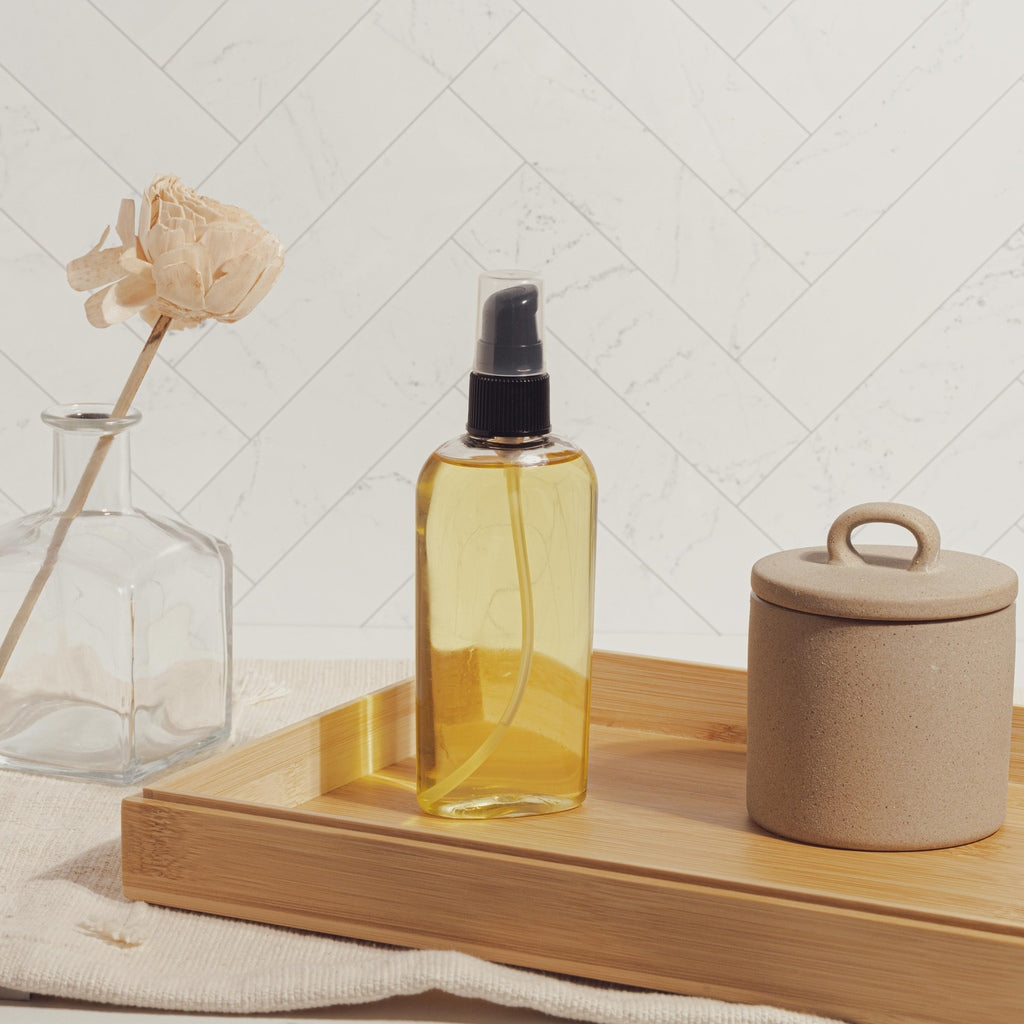
Winterizing Your Skin and Hair
Start by choosing oils filled with linoleic acid to restore the skin’s barrier function, decrease itching and dryness, and increase the moisture found in our stratum corneum. Oleic acid can increase moisturization and reduce transepidermal water loss, while oils with gamma linoleic acid (GLA) can help restore the barrier function of our skin faster as well as reduce inflammation.
I love choosing oils with a balance of linoleic and oleic acid, like rice bran, sesame, or pumpkin seed oil. Soy bean oil is one of my favorites as it’s an inexpensive oil filled with Vitamin E and phytosterols that act as anti-inflammatories, but it’s considered a greasy ingredient, which some people might not like. Evening primrose oil is another in my favorites category as it’s a light, non-greasy feeling oil filled with GLA and as little as 10% can help alleviate the symptoms of dry skin very quickly.
Butters will help prevent serious TEWL through occlusion while softening and moisturizing. Shea butter is considered greasy to very greasy, mango less greasy or dry, while cocoa falls in the middle. Or consider using one of the less common butters, like kokum, which is harder and less greasy than cocoa butter or cupuaçu, which is considered less greasy and softer. And don’t forget about the hydrogenated butters as a great way to add unique properties, like açai butter, which contains so many anti-oxidants or aloe butter, filled with polysaccharides for hydrating and phytosterols to reduce inflammation
Protecting your skin from the elements with a good occlusive is vital. The three main ones approved by the FDA and Health Canada are dimethicone, cocoa butter and allantoin. The first two are good in anhydrous products or emulsions, while allantoin is a water soluble powder derived from comfrey root, aloe or urine (but probably not urine) that works well in emulsions and products only containing water. I use it in everything from body butters to my favorite Korean skin care style hydrating toner, it’s just that awesome.
As much as we love lotion bars and whipped butters, anhydrous products don’t hydrate your skin, they only trap what’s there. If you’re parched, we need to bring some water to this moisturizing party!
Glycerin, sodium lactate, hyaluronic acid or propylene glycol – known as humectants or your skin’s best friends - draw water from the atmosphere to your skin to hydrate. As each one has an ideal humidity level at which they work best, combine a few to take advantage of your local climate. I like to combine 3% glycerin, 2% sodium lactate, 2% propylene glycol or dipropylene glycol, and 2% panthenol to create a hydrating super-group that can help even the driest skin. Use this or another combination in lotions, toners, cleansers and washes, shampoos, and conditioners for well hydrated hair and skin.
Aloe vera extract is a staple in my workshop all year ‘round to form a hydrating film on my skin and hair with all those lovely polysaccharides, and I always include amino acids and hydrolyzed proteins for the same reasons.
Botanical extracts that reduce inflammation, soothe dry skin, or increase hydration are a welcome addition to any product. These include: chamomile extract - which can also decrease TEWL for up to 48 hours, calendula extract - a good anti-inflammatory ingredient that soothes inflamed or chapped skin and bamboo extract - which is a great anti-irritant and anti-oxidant.
To maximize hydration, spritz a hydrosol, floral water or distillate before applying anhydrous products.
HYDRATING CHAMOMILE & ROSE WATER MISTER FOR HAIR & SKIN
71% Distilled Water
10% Rose Water Essential Hydrosol
5% Chamomile Extract (liquid)
3% Calendula Extract (liquid)
3% Bamboo Extract (liquid)
2% Silk Amino Acids, (liquid)
2% Sodium Lactate
2% Panthenol
0.50% Allantoin
0.10% Aloe Vera Powder – 100 x
0.50% Germall Plus, (liquid) or another broad spectrum preservative
Heat the distilled water slightly, then weigh all the ingredients into the same container, and mix with a fork until the powders are dissolved. Pour into a spray bottle, and rejoice!
Winter is harsh on your hair, too, with all that wind and cold so add a little babassu or coconut oil to your hair care routine neat as a hot oil treatment or in a conditioner. Increase hydration with humectants, like 2% panthenol combined with glycerin or propylene glycol, and add a cationic polymer like honeyquat at 3% in the cool down phase to add extra conditioning to a shampoo or leave in. Add a leave in conditioner to your post-washing routine that includes at least 2% dimethicone, or create an anti-frizz spray with 90% cyclomethicone and 10% dimethicone.
Winter can be so harsh on our hair and skin, but making a few small changes to your favorite formula, like increasing occlusive ingredients like allantoin or cocoa butter, adding oils to your hair care products or combining humectants, can make all the difference.
I love choosing oils with a balance of linoleic and oleic acid, like rice bran, sesame, or pumpkin seed oil. Soy bean oil is one of my favorites as it’s an inexpensive oil filled with Vitamin E and phytosterols that act as anti-inflammatories, but it’s considered a greasy ingredient, which some people might not like. Evening primrose oil is another in my favorites category as it’s a light, non-greasy feeling oil filled with GLA and as little as 10% can help alleviate the symptoms of dry skin very quickly.
Butters will help prevent serious TEWL through occlusion while softening and moisturizing. Shea butter is considered greasy to very greasy, mango less greasy or dry, while cocoa falls in the middle. Or consider using one of the less common butters, like kokum, which is harder and less greasy than cocoa butter or cupuaçu, which is considered less greasy and softer. And don’t forget about the hydrogenated butters as a great way to add unique properties, like açai butter, which contains so many anti-oxidants or aloe butter, filled with polysaccharides for hydrating and phytosterols to reduce inflammation
Protecting your skin from the elements with a good occlusive is vital. The three main ones approved by the FDA and Health Canada are dimethicone, cocoa butter and allantoin. The first two are good in anhydrous products or emulsions, while allantoin is a water soluble powder derived from comfrey root, aloe or urine (but probably not urine) that works well in emulsions and products only containing water. I use it in everything from body butters to my favorite Korean skin care style hydrating toner, it’s just that awesome.
As much as we love lotion bars and whipped butters, anhydrous products don’t hydrate your skin, they only trap what’s there. If you’re parched, we need to bring some water to this moisturizing party!
Glycerin, sodium lactate, hyaluronic acid or propylene glycol – known as humectants or your skin’s best friends - draw water from the atmosphere to your skin to hydrate. As each one has an ideal humidity level at which they work best, combine a few to take advantage of your local climate. I like to combine 3% glycerin, 2% sodium lactate, 2% propylene glycol or dipropylene glycol, and 2% panthenol to create a hydrating super-group that can help even the driest skin. Use this or another combination in lotions, toners, cleansers and washes, shampoos, and conditioners for well hydrated hair and skin.
Aloe vera extract is a staple in my workshop all year ‘round to form a hydrating film on my skin and hair with all those lovely polysaccharides, and I always include amino acids and hydrolyzed proteins for the same reasons.
Botanical extracts that reduce inflammation, soothe dry skin, or increase hydration are a welcome addition to any product. These include: chamomile extract - which can also decrease TEWL for up to 48 hours, calendula extract - a good anti-inflammatory ingredient that soothes inflamed or chapped skin and bamboo extract - which is a great anti-irritant and anti-oxidant.
To maximize hydration, spritz a hydrosol, floral water or distillate before applying anhydrous products.
HYDRATING CHAMOMILE & ROSE WATER MISTER FOR HAIR & SKIN
71% Distilled Water
10% Rose Water Essential Hydrosol
5% Chamomile Extract (liquid)
3% Calendula Extract (liquid)
3% Bamboo Extract (liquid)
2% Silk Amino Acids, (liquid)
2% Sodium Lactate
2% Panthenol
0.50% Allantoin
0.10% Aloe Vera Powder – 100 x
0.50% Germall Plus, (liquid) or another broad spectrum preservative
Heat the distilled water slightly, then weigh all the ingredients into the same container, and mix with a fork until the powders are dissolved. Pour into a spray bottle, and rejoice!
Winter is harsh on your hair, too, with all that wind and cold so add a little babassu or coconut oil to your hair care routine neat as a hot oil treatment or in a conditioner. Increase hydration with humectants, like 2% panthenol combined with glycerin or propylene glycol, and add a cationic polymer like honeyquat at 3% in the cool down phase to add extra conditioning to a shampoo or leave in. Add a leave in conditioner to your post-washing routine that includes at least 2% dimethicone, or create an anti-frizz spray with 90% cyclomethicone and 10% dimethicone.
Winter can be so harsh on our hair and skin, but making a few small changes to your favorite formula, like increasing occlusive ingredients like allantoin or cocoa butter, adding oils to your hair care products or combining humectants, can make all the difference.