Articles

Beeswax Recipes! How to Make Wickless Candles

Article

Beeswax Recipes! How to Make Wickless Candles
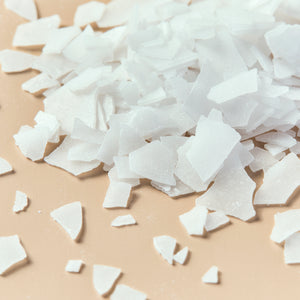
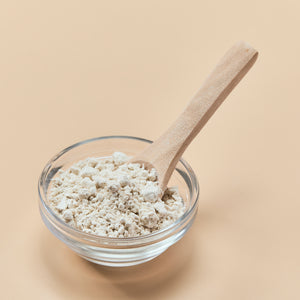
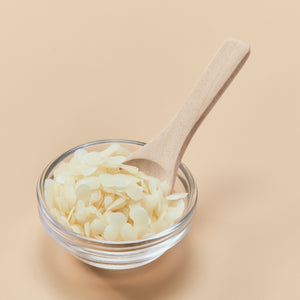
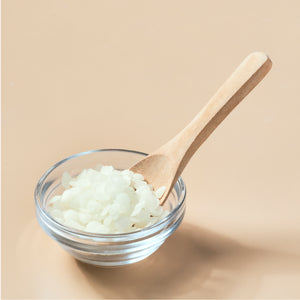
This week we highlight beeswax. We have four new recipes that use beeswax and in this video we will show you how to make one of the recipes. A wickless candle throws beautiful aromas in your home without the open flame. Learn how to make them in this video.
How You Can Actually Take Time Off For Spring Break

Article

How You Can Actually Take Time Off For Spring Break
Many small business owners enjoy their work, however, how much is too much? With a little bit of planning you can step away for a much needed break!
The Chemistry behind Alcohol and MP Soap

Article

The Chemistry behind Alcohol and MP Soap
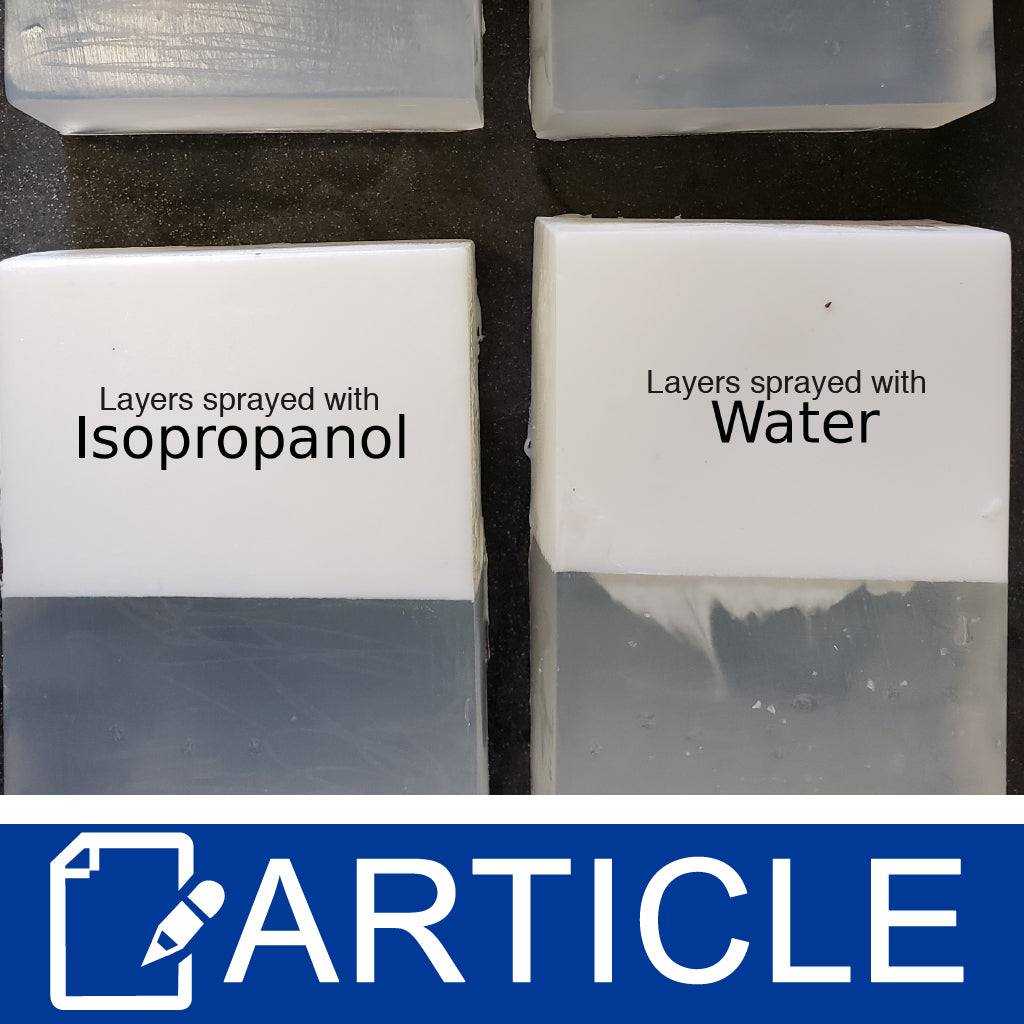
Because the chemistry of Cold Process (CP) soap is delightfully complex, I have spent many happy hours devising experiments to answer questions and solve problems for those who make CP soap. Makers of Melt and Pour (MP) soap, however, face problems different from those I have investigated before. For example, while CP and MP soaps can be poured in layers, CP layers are usually at the same temperature and in the same state (liquid). But a hot, liquid MP layer is usually poured on top of a cold, solid MP layer, and because of these differences, the joint between layers may not be strong. Additionally, transparent soap is much more common in the MP world than it is in the CP one, and so bubbles and blemishes within a transparent layer must be minimized. Fortunately, makers of MP soap have largely solved both of these problems by spritzing each layer of soap with alcohol. So all that remains for me is to figure out why this works. To begin with, I have to distinguish two usages for the word soap. For chemical and regulatory purposes, soap is an alkali salt of a fatty acid. But MP “soap” is almost always a blend of soaps, solvents, and detergents. For this project I used Crafter's Choice Premium Extra Clear Soap, which consists of sorbitol and propylene glycol (solvents), sodium laureth sulfate (detergent), sodium stearate and sodium myristate (soaps), and sodium cocoyl isethionate (detergent). Crafter's Choice Premium Ultra White Soap has the same ingredients plus titanium dioxide colorant.I also need to clarify the word alcohol. This is actually a family of chemicals with some familiar members. Ethanol (ethyl alcohol, grain alcohol, Everclear) is the one used in beverages. Isopropanol (isopropyl alcohol, rubbing alcohol) is the one used for first aid. Soaps and detergents are surface-active agents, or surfactants, meaning that they form organized structures at aqueous surfaces. The molecules organize into a film on top, which we recognize as bubbles, and into droplets called micelles in the interior. When soap or detergent is added to water, they don't actually dissolve—they form an emulsion. You can see this for yourself by adding, for example, one gram of MP soap to 200 mL of hot water. A soap/water emulsion is cloudy (because of the micelles), not transparent, with bubbles at the surface. In contrast, soaps and detergents actually dissolve in ethanol and isopropanol. Rather than forming a cloudy emulsion with bubbles at the surface, a soap/alcohol solution is transparent, with no bubbles. The soap and detergent molecules do not organize into films and micelles, but float around in the alcohol as individual molecules. Figure 1 shows a soap/water emulsion on the left, and soap/ethanol and soap/isopropanol solutions in the center and on the right. Even when these solutions are shaken, no bubbles form because the soap molecules do not form a film at the surface. So when you spritz alcohol onto bubbles at the surface of MP soap, the soap dissolves in the alcohol. The ordered film of soap molecules breaks up into individual molecules, and the bubbles disappear.In addition to removing bubbles, I wanted to explore whether alcohol helps soap layers to adhere to one another. I began by supposing that alcohol dissolved some of the soap at the surface of a cold, solid layer of soap, and that when hot liquid soap was poured on top of it, the hot liquid mixed with the soap solution, forming a zone containing soap from both layers. But how to test this hypothesis? I wanted to pour two layers that could be easily distinguished from one another, so I chose a transparent layer and a white layer. I also wanted to be able to try to break the layers apart so that I could see whether they had, in fact, blended together. But layers are most frequently poured horizontally, and pulling apart such layers seemed problematic at best. So I opted to pour two white bars of soap. After they cooled to room temperature, I cut each bar in half and returned a white half-bar to the left side of four single-bar molds. I then poured transparent soap into the right side of each mold. The result was four bars, each with a white half and a transparent half, as shown in Figure 2. I wanted to be able to treat the white/transparent interface of each bar to see what, if any, effect alcohol might have. One bar was not treated. The interfaces of the second, third, and fourth bars was treated with water, ethanol, and isopropanol, respectively. The joint between the layers was crisp and clean for three of the bars, but the one treated with water had visible tendrils of white soap penetrating the transparent layer. I then tested each joint by laying it over a pencil and pressing the ends down with both hands, as shown in Figure 3. The untreated bar broke cleanly at the joint, with no white soap clinging to the transparent soap. The bar treated with water did not break over the pencil; it just bent. I had to use all my strength to break it with my fingers and thumbs, and when I did, there was lots of white soap adhering to the transparent soap. The bar treated with ethanol broke with some difficulty over the pencil, and there was some white soap adhering to the transparent soap. Finally, the bar treated with isopropanol broke cleanly over the pencil, with no white soap adhering to the transparent soap. Figure 4 shows the broken joints, face up. Compared to the untreated bar, the one treated with water had the strongest joint, but streamers of white soap visibly penetrated the transparent soap. This could be an interesting feature if done on purpose, but most people would consider this a blemish. The bar treated with isopropanol was very similar to the untreated bar. In a horizontal layer, bubbles could weaken the joint, and spraying with isopropanol may eliminate bubbles, but it does not seem to otherwise improve the joint. The winner in this round was ethanol. The white/transparent interface remained crisp and clean, but the joint was noticeably strengthened compared to the untreated bar.This does not mean you have to ditch isopropanol for ethanol. After all, if it ain't broke... But if you have a problem with weak joints between soap layers, ethanol may provide improved adhesion between layers without sacrificing clean lines. And if you want some interesting texture, you may want to investigate a joint venture with water.
Time and Temperature

Article

Time and Temperature
Taking a look at temperature profiles for cold and hot process soap. Last month we looked at the possibility of using very high temperatures to shorten the time needed to completely saponify an oil. In extreme cases, this may happen in as little as 5 minutes. One might assume that “hot process” (HP) and “cold process” (CP) soaps differ in the temperatues used, but the designations have more to do with technique than temperature. In the hot process, oils and lye are mixed in a container capable of applying heat to the mixture. The source of heat might be a crock pot, microwave oven, conventional oven, or hotplate. The soap batter is typically heated until it reaches gel phase and the saponification reaction is complete. Interestingly, it is possible to make HP soap at low temperature by using only gentle heat. In the cold process, oils and lye may be heated, but no external heat is applied after they are mixed. The bulk of the saponification reaction happens in the mold. Also interestingly, it is possible to make a CP soap at high temperature just by heating the oil, as described last month. Here we will explore the relationship between time and temperature. Typically when lye is mixed with oil, the mixture becomes gradually more viscous until it reaches trace. The batter then continues to thicken until it no longer flows. At this point it is essentially a solid. But if conditions are right, the solid soap remelts, a condition called “gel phase” by handcrafted soapmakers, and “neat soap” by commodity soap chemists. The temperature at which this phase transition happens depends on the oils used and the lye concentration.Consider, for example, our standard four-oil blend: coconut oil 28%, palm oil 28%, olive oil 39%, castor oil 5%. We can make soap from this oil using lye with a wide range of concentrations. A medium-water soap, typical of what many people use, might use lye with a concentration of 33% NaOH. A low-water soap, (often referred to as a “water discount”) might use lye with a concentration of 40% NaOH. The temperature profiles of these soaps depend on the starting temperature when the oils are mixed with the lye. A temperature profile is a useful way to characterize a soap formula. Simply heat the oil to the starting temperature you wish to explore and, after mixing with your lye, measure the temperature periodically over the course of a couple of hours. An infrared thermometer is particularly convenient for this task, since you just point and click to take a reading. A stopwatch (perhaps on your smartphone) is convenient for measuring time.You don't have to hit an exact starting temperature, and the lye need not be at the same temperature as the oil. For example, you might intend to start at 100°F, but because your lye is at room temperature, you could wind up at 95°F after mixing. Just record the actual time and temperature. You will want to record the temperature frequently (about once per minute) at the beginning when the temperature is changing rapidly. You can then record less frequently as the soap slowly cools. It is not important to hit any particular time or temperature. Just record the actual time and temperature as close to one another as possible. If you notice the soap moving into gel phase, be sure to make a note of it. Figure 1 shows a temperature profile for a medium-water soap. The horizontal line at 71°C (160°F) marks the division between gel phase and solid soap. The soaps labeled 40°C and 60°C never get warm enough to reach gel phase. They gradually warm as the exothermic saponification reaction proceeds. Eventually, the heat produced by the reaction is less than that lost to the surroundings, and the soaps slowly cool. The soap labeled 65°C gradually warms until it reaches gel phase. Then the reaction takes off, climbing well above the gel temperature. The two hot soaps start above the gel temperature and the saponification reaction proceeds very rapidly. They hit peak temperatures in a matter of minutes, and once saponification is complete, they cool more rapidly than the other soaps because no further heat is coming from the reaction. Figure 2 shows a temperature profile for a low-water (water discounted) soap. With a lye concentration of 40%, this soap gels at 87°C (189°F), much higher than the medium-water soap does. While the soaps labeled 40°C, 60°C, and 65°C get hotter than the corresponding medium-water soaps, they do not reach this higher gel temperature. Only the two hottest soaps reach gel phase, and they do so very quickly. The specific temperature for the gel phase transition depends on the oils used as well as the lye concentration, but the general trend is that the gel temperature increases as the lye concentration increases. At the same time, soaps made with high-concentration lye get hotter than those with low-concentration lye, and they do so more quickly. Whether or not a soap gels depends on whether the soap reaches the gel temperature. The temperature profile also gives you a clue as to how quickly the saponificiation reaction is completed. When the temperature reaches its peak and begins to decline, it is because heat is being lost to the surroundings more rapidly than it is being produced by the reaction. The temperature profile can also be used to diagnose problems with ingredients that are adversely affected by high temperatures. While measuring the profile on a batch, notice the temperature at which the adverse effect takes place. In subsequent batches, you can gradually decrease the starting temperature or decrease the lye concentration to prevent the soap from getting too hot.The temperature profile is very easy to add to a batch record. It requires only a thermometer, a stopwatch, and a few extra minutes to write down the time and temperature. You can plot the data on graph paper or using a spreadsheet, or you can just look at the data without plotting it. While you may not bother to record it for every batch, it can be useful for diagnosing problems and solving them. Footnote:1. Data in this article were collected by students John Campbell, Andrew Basinger, Tyler Bowman, and Ron Davis under the supervision of Kevin Dunn. Parts of it are documented in Chapter 22 of Scientific Soapmaking (Kevin Dunn, Clavicula Press, 2010).
If the World Hands You Lemons

Article

If the World Hands You Lemons
Following this month's citrus theme, I thought I would explore the properties of two compounds common to all citrus plants: citric acid and limonene. Though they come from the same fruits, these two chemicals could not be more different from one another. One is soluble in water, the other isn't. One has a strong taste, the other a strong aroma. One will sequester metal ions, the other will dissolve grease and many adhesives. Two powerful and commercially important chemicals from the same little package of lemony goodness. Before we discuss these molecules, we need to review a little water chemistry. You probably don't even remember when you learned the formula, H2O. It is simply common knowledge. But those three little atoms dominate the properties of the world as we know it. Hydrogen and oxygen atoms are bound to one another by electrons, which carry a negative charge. But they don't share those electrons equally. Oxygen is a relative electron hog, and hydrogen is a light-weight. The result is that oxygen atoms in water are partially negative, and hydrogen atoms partially positive. Opposites attract. The negative oxygen atom of one water molecule is attracted to the positive hydrogen atoms of each neighboring water molecule, and vice versa. The result is that water molecules are attracted to one another more strongly than they are to just about any other molecule. Figure 1 shows a structural formula for citric acid. As discussed in last month's column, a structural formula is the kind of thing that a chemist can easily draw on a napkin when talking to another chemist. A structural formula tries to include the most important details about the molecule without worrying about extraneous details. Each line represents a bond, and if two bonds join with no explicit atoms, the bonds are assumed to join two carbon atoms. Each carbon atom bristles with one, two, or three hydrogen atoms, but the structural formula leaves them to your imagination. Though all organic molecules contain carbon, their chemical properties are dominated by the atoms other than carbon.This formula has seven oxygen atoms, four of which are bound to hydrogen atoms. The other three oxygen atoms are “double bonded” to carbon atoms. That grouping of a double bonded oxygen next to an OH is instantly recognizable to a chemist as an acid group, and if it looks familiar, you may be remembering it from last month's column. It is the same grouping at the hydrophilic head of a fatty acid. Citric acid has three such groups, which packs an awful lot of acidity into a tiny, little package. To a water molecule, those OH groups are nearly as attractive as other water molecules. For this reason, citric acid is quite soluble in water (and saliva). And because three of those OH groups are next to double-bonded oxygen atoms, the hydrogen atoms are acidic. The defining property that led chemists to recognize acids as a group is that they taste sour. And citrus juices contain both citric acid and various sugars, leading to the combination of sweet and sour we describe as “tangy.”Citric acid has one more property that makes it important for makers of soap and cosmetics—it can bind to metal ions in aqueous solution. Metal ions like calcium or iron can have deleterious effects on soaps and cosmetics. Calcium from hard water, for example, combines with soap to produce soap scum. In a high-pH product like soap, sodium citrate (the sodium salt of citric acid) can be used to tie up these metals, preventing them from binding to soap. Citric acid isn't the only useful chemical to come out of citrus fruits. Figure 2 shows a structural formula for limonene. While it's squiggly lines show how the carbon atoms are linked together, perhaps the most important thing about it is what you don't see. No oxygen. If you were a water molecule looking at limonene, you would find no familiar OH groups. A molecule like this is not soluble in water (or saliva), and consequently has little or no taste. And where do you find limonene? Not in the juice of the lemon, but in the oily rind. Limonene is a principle component of the oils pressed from the rinds of all citrus fruits.Not only is limonene not attractive to water, the absence of atoms other than carbon and hydrogen means that it isn't strongly attracted to other molecules generally. That means it can easily evaporate, traveling from the rind, through the air, to your nose. That's why you can smell limonene in citrus oil, but not citric acid in the juice. Finally, because it does not dissolve in water, limonene is good at dissolving other things that are insoluble in water, things like adhesives, tar, and grease. That's why citrus oils have become useful as alternatives to petroleum solvents. The detailed chemistry of these two molecules is beyond the scope of this article. But you are now able to look at structural formulas on websites and instantly know something about why a molecule behaves as it does. If it has an OH group, it interacts strongly with water. If it has multiple OH groups, it likely is soluble in water and saliva, has a strong taste, and not much of an aroma. If a molecule has no OH groups, it is likely insoluble in water or saliva, and relatively flavorless. I don't know about you, but after all this talk of molecules, I have a hankering for some lemonade.
Self Love

Article

Self Love
As Valentine's Day approaches, who are the people in your life who you think most about? Is it a significant other or your children? How about yourself? It's ok sometimes to show yourself some love. Here are some of the most common behaviors of people who are not practicing self-love. Ah, it’s February. Hearts, flowers, and sentiments of love are in the air! It’s a wonderful time to pause and contemplate those who are near and dear to your heart and all they bring into your life.Who is the first person you think of as Valentine’s Day approaches? Your mate and children are possibly the most likely recipients for those little boxes of chocolate goodies and cute cards bearing sweet words of love and appreciation. But let me ask you this: when was the last time you did something really, really nice for yourself?The calendar is filled with constant reminders to show appreciation to the important people in our lives, but there isn’t a single day on the calendar that reminds us to turn our love and appreciation inward. Where is National Self- Love Day anyway? I think it would do us good to celebrate ourselves for a change, don’t you?Some people believe that taking care of and treating themselves with the same kindness and generosity that they treat others is self-indulgent. Some simply don’t want to take the time learn new habits and place attention on their own needs and desires. In my experience as a coach, these folks are typically overworked, unhappy, and exhausted. Many of them are nowhere near the level of success that they wish to achieve and some are even suffering miserably. All because the love that they hold in their hearts is rarely directed inwardly.But this can change with a shift in mindset and a newfound appreciation of your special qualities, gifts, and spirit. I’ve seen people turn their lives and businesses around simply by raising their self-awareness and acting on the desires that they previously deemed as selfish and indulgent. I can promise that as you grow to appreciate and honor yourself, it will be reflected in the world around you: in your business, relationships, and even in your finances. So what are the signs that you’re not showing yourself enough love and appreciation? Here are some of the mostcommon behaviors that I witness in someone who lacks self love. I’ve also included some mindset tips on how to turn that behavior around. I suggest journaling about the steps you take, how it feels, and what you notice as time goes by. The act of journaling will raise your awareness and help you to see where you need to improve and how far you’ve come. Journaling is yet another act of self love! Negative Self-Talk When you make a mistake, get clumsy, or say something that you regret how do you react? Do you call yourself names, throw fits of anger, blame others? This is one sure sign of selfloathing rather than self-love.Instead: Simply observe; as though you are 5000 feet above the situation. Oftentimes we respond negatively because we are overwhelmed and preoccupied. If you begin to lose patience with yourself take a deep breath and think about how you would treat someone you love when they make the same mistake. Can you treat yourself in the same way? With practice you can. Staying Too Busy When I have a coaching client who cites a lack of time for their inability to rest and play I can usually prove them wrong. People who don’t appreciate themselves often feel guilty for taking time to self-nurture, relax, and play. They unconsciously busy themselves with menial tasks instead. Do you really need to refill the paperclips and go over that expense report for the third time today?Instead: Be honest with yourself about how you’re spending your time and what you may be avoiding. Then make a list of things you would like to do once you give yourself permission to pay attention to your own needs and desires. If you have a go to list you won’t have to give it any thought and may not talk yourself out of something that puts you in the spotlight. Indulge a little, you might just get used to it! Putting Everyone Else First The airlines say it the best: “Please apply your own air mask before assisting young children and those around you.” In other words, what good are you to others if you’re dead? Taking care of yourself is yet another expression of love. When you care enough about yourself it tells those around you that you love them enough to stick around. This is not a selfish act! Ironically, most people who bow to the needs of othersdo it to satisfy their own needs, not those of everyone else. If you were to ask your spouse, parent, friend, and maybe even your children what their expectations of you are, I’m certain that their thoughts would differ from yours quite a bit.Instead: You’ve made a list of things that are important to you; activities that you can do just for yourself. Now determine your non-negotiables: things like exercise, proper nutrition, alone time, a monthly massage, a night out with the girls or guys. Now schedule those things on your calendar. These are dates with yourself that can no sooner be cancelled than an important client meeting. As you become healthier, more balanced, and acknowledge your own deserving those around you will appreciate you all the more!
A woman sitting on an office desk meditating

Article

Simple Ways to Ease Your Stress in Five Minutes (or Less)!
You can’t eliminate all the uncertainty that arises when you own a business. But you can control how you react to the demands you face as an entrepreneur. Try these three simple wellness practices to improve your mental well being, and reduce the stress that can hinder your ability to perform. Alternate nostril breathing. Studies estimate that 75% of entrepreneurs work more than 40 hours a week. Those long hours may help you grow your business. But they can also lead to fatigue, burnout, and stress. If exhaustion has become a way of life, try replacing your afternoon Starbucks run with alternate nostril breathing, which has roots in yoga and Ayuverdic medicine. This simple breath practice is thought to balance the sympathetic and parasympathetic nervous systems to calm your mind, and improve mental focus. Gently place your hand over the bridge of your nose so that your thumb can press gently on your right nostril to “close it off.” Close your eyes. Take a deep breath through the left nostril, inhaling for three to four counts. Before you exhale, place your ring finger over the left nostril, closing it off. Lift your thumb, and release the breath out of the right nostril for three to four counts. Leave your fingers as they are and inhale slowly through the right nostril. Place your thumb on the nostril, exhaling the breath through the left side. Repeat the process for two to five minutes, balancing the number of inhales and exhales through each nostril. Meditation. Entrepreneurs tend to be driven, curious, and high-energy. Though those traits can seem contradictory to the patience meditation requires, there are plenty of world-known entrepreneurs with “type A” personalities (including master motivator Tony Robbins and Ray Dalio, founder of the world’s largest hedge fund) who credit meditation to their ability to manage stress, and approach their businesses with clarity. You too can benefit from a consistent meditation practice—even if your schedule is packed, your stress level high, and your patience limited. Set a goal to meditate daily for three weeks, for just five to eight minutes. Find a comfortable space free of noise and distraction. Find a comfortable place to sit--even if that means sitting in your desk chair—that allows you to sit tall. Set a timer to signal a beginning and end of your practice. Focus on your breath. Inhale for a count of four. Exhale for a count of seven. Inhale for a count of four. Repeat. When your mind wanders (and it will), don’t give up. Just observe the thought—and let it pass. Bring your focus back to your breath by counting the sound of the inhale and exhale, and listening to your breath. As meditation becomes part of your day, increase your meditation time by just two minutes each week. Before you know it, you’ll be able to meditate comfortably for 20 to 30 minutes a day. Journaling. Creating a to do list for the day can help you prioritize and feel accomplished. But seeing a long list of tasks may not be beneficial to your stress level. Journaling is a to do list of sorts for your inner state. The goal is to spend a few minutes writing down the events of the day that were emotionally meaningful, and how they made you feel. What you write doesn’t need to be cohesive, or grammatically correct, nor does it have to result in a solution or an insight. The idea is simply to release lingering emotional reactions and anxiety the day may have produced so you can find a sense of closure to the day, and awake the next morning stress-free and renewed.
DIY Fabric Refresher Homemade Febreze

Article

DIY Fabric Refresher Homemade Febreze
Why Make Homemade Febreze? Creating your own homemade Febreze offers several advantages. First, it lets you avoid the harsh chemicals often found in store-bought fabric refreshers. Second, it’s budget-friendly, as you likely already have most ingredients at home. Lastly, a homemade fabric spray can be tailored to your favorite scents, making it practical and personalized. If you’re exploring other DIY projects, check out our Soap Making Kits for more ways to craft your home essentials. Essential Ingredients for a DIY Fabric Refresher To make your DIY fabric refresher, you'll need just a few simple ingredients: Water: The base of the spray makes it safe to use on fabrics. Rubbing alcohol: Helps neutralize odors and ensures quick drying. Essential oils: For a fresh scent that lasts. Popular choices include lavender, lemon, or eucalyptus. Baking soda (optional): Adds an extra layer of odor absorption for tough smells. These ingredients combine to create an effective homemade Febreze recipe that can freshen up any space without synthetic chemicals. How to Make Homemade Febreze in Simple Steps Now, let’s dive into how to make homemade Febreze. The process is quick, easy, and customizable: Mix the Ingredients: In a spray bottle, combine 1 cup of water, 1/4 cup of rubbing alcohol, and 10-15 drops of your favorite essential oils. Optional Addition: Add a tablespoon of baking soda to the mixture if you want extra odor-fighting power. Shake Well: Give the spray bottle a good shake to combine all ingredients. Spray Away: Lightly mist your fabrics to refresh and eliminate odors. That’s it! You’ll have your homemade fabric spray ready in just a few minutes.For other quick DIY ideas to keep your home fresh, check out our Candle Fragrance Oils Collection to find the perfect scents for your homemade products. Tips for Customizing Your Homemade Febreze Recipe One of the great things about a DIY fabric refresher is how customizable it can be. Here are a few tips to personalize your homemade Febreze recipe: Adjust the Scent: Add more or fewer drops of essential oil depending on how strong you want the fragrance. Create Seasonal Sprays: Use seasonal essential oils like peppermint for the holidays or floral scents for spring. Use Distilled Water: To prevent unwanted bacteria growth, consider using distilled water instead of tap water for a longer shelf life. To explore more DIY projects like this, visit our DIY Soap Making Supplies for ideas that help you craft a healthier, more natural home. Benefits of Using a Homemade Fabric Spray Making your homemade fabric spray has numerous benefits. It’s a safer alternative for homes with children or pets since you control the ingredients and avoid harmful chemicals. A DIY Febreze is also cost-effective, as it’s made with simple household items. Another major perk is the ability to switch up the scent based on your mood or season, giving you the flexibility that store-bought versions don’t offer.For other sustainable home projects, explore our Soap Molds for easy ways to create natural products at home. How to Store Your DIY Fabric Refresher Safely Proper storage is key to ensuring your homemade Febreze remains fresh and effective. Store your DIY fabric refresher in a cool, dry place away from direct sunlight. Use a dark glass spray bottle to protect the essential oils from degrading over time. Be sure to label the bottle with the date you made it so you know when it’s time to mix a new batch. For optimal freshness, it’s best to use your homemade spray within 3-4 weeks. Frequently Asked Questions About DIY Febreze and Fabric Refresher How long does homemade Febreze last?Your DIY fabric refresher should last about 3-4 weeks. If you notice the scent fading or the solution becoming cloudy, it’s time to mix a new batch.Is homemade Febreze safe for all fabrics?This homemade Febreze recipe is safe for most fabrics, including couches, curtains, and carpets. However, it is always a good idea to test a small patch first to ensure no discoloration.Can I make a more potent version for tough odors?Absolutely! Add more essential oils or baking soda to your homemade fabric spray to combat more challenging odors. You can also add more rubbing alcohol to help neutralize more pungent smells.
Fixed Oils & Butters - Properties

Article-card

Fixed Oils & Butters - Properties
We have created a chart that lists all of the characteristics and properties of Oils & Butters. Use this chart as a guide when making soap, lotion, lip gloss and more! Properties of Apricot Kernel Oil Accelerates Trace: NO Helps Hardness: NO Bubble Density: CreamyBubble Stability: StableAfter Touch Soap: ConditioningCeansing: Average Absorption: AverageGlide: ExcellentAfter Touch Cosemetics: SlipperyColor: YellowPoints of Interest: Light weight oil that is high in Vitamin A, Oleic Acid and Linoleic Acid. Excellent texture that is great for all skin types. Exhibits skin softening, moisturizing properties and is therefore recommended for skin that is dry, irritated or has prematurely aged. All Natural. Expeller Pressed. Can you name the properties of each oil and butter? If not, View Chart Here
5 Ways to Boost Customer Spending For Your Craft This Season

Article

5 Ways to Boost Customer Spending For Your Craft This Season
Halloween marks the beginning of holiday trends and gift shopping. What is your business doing to capitalize on the season? Since “buyer mentality” prevails during this time many businesses make the bulk of their revenue from now until January 1st. Here are some marketing strategies to help you boost sales and offer customers a little fun and a lot of motivation to buy. Halloween marks the beginning of holiday trends and gift shopping. What is your business doing to capitalize on the season and take advantage of increased holiday shopping spending? Since “buyer mentality” prevails during this time, many businesses make the bulk of their revenue from now until January 1st. Here are some seasonal promotional ideas to help you increase customer spending, offer a little fun, and create a lot of motivation to buy during the gift shopping season. Create Products for Every Budget Smart retailers develop holiday gift ideas to fit small budgets and meet a wide range of gift-shopping needs. Think soaps in shapes that celebrate the season, fragrances with themed names and festive labeling, and fun little items priced under ten (even five) dollars. These affordable offerings encourage impulse buys and help customers check off multiple names on their lists. Lower-priced items also help increase the number of units per transaction, directly supporting efforts to increase average order value. These budget-conscious products are great product recommendations for shoppers looking for quick wins and stocking stuffers. Offer Holiday Packages Pre-packaged gift bundles are a hot item because they take the decision-making and work out of buying. Choose your most popular items and combine them into themed sets. Add a festive touch by naming your packages creatively and reminding customers about those they shop for every season—teachers, carpool drivers, and helpful neighbors. These bundling products strategies not only make shopping easier for your customers, but also elevate perceived value and increase total cart size, which contributes to a healthy holiday spending lift. You can even offer tiered options—some priced lower, others featuring premium items at higher prices for shoppers looking to impress. Suggest Other Products Does your shopping cart offer the option to upsell at checkout? If a customer adds your “Witch on a Broom” soap, they may also love your “Enchanting Brew” perfume. Consider integrating shopping cart suggestions that automatically recommend complementary items as the customer browses or checks out. This is a key part of successful upsell & cross-sell strategies, encouraging buyers to explore more and ultimately spend more. These product recommendations are subtle but highly effective tools to increase consumer spending. Offer Volume Discounts Encourage customers to buy more with volume discount deals. For example, offer 10% off orders over $30 and scale the discount as their cart size increases. You might also offer a discount when someone purchases five or more of the same item. This not only incentivizes larger orders but creates a sense of urgency and reward. Customers are often happy to spend a little more to unlock a better deal, helping you strategically increase average order value and build better customer spending habits. These types of seasonal promotional ideas work especially well during holiday campaigns. Create a Club Membership programs are highly effective for creating recurring revenue and long-term customer relationships. Consider a “soap and fragrance of the month” club that ships new seasonal items automatically. Not only does this build anticipation, it provides consistent income throughout the year. These clubs can support seasonal product launches and allow you to offer exclusive discounts in exchange for long-term commitment—turning seasonal buyers into year-round customers. If you don’t want to commit to a monthly subscription, consider launching a loyalty program that rewards repeat purchases with perks or discounts. This kind of retention-focused strategy builds customer loyalty and increases the lifetime value of each shopper. Add Style to Your Site The human brain processes visuals faster than words, so create a holiday shopping environment that’s rich with imagery. Boring product photos won’t cut it—your site should offer an immersive, holiday-themed experience. Showcase your products as place card holders, stocking stuffers, or gift toppers to inspire shoppers with creative use cases. Add lifestyle images and demonstration videos that show how your products bring joy. These visuals don’t just drive engagement; they can improve visibility in search engines too, offering a natural boost to your holiday sales tips and drawing attention to your product recommendations. Don’t try to do everything at once. Choose the strategies that most resonate with you and focus on marketing them effectively. Share your efforts on Facebook, Pinterest, and Instagram—where a single compelling image or video can go viral and dramatically increase traffic. This is the season where savvy, well-planned promotions can make all the difference in achieving your holiday shopping spending increase goals.