Saponification: How Soap Actually Works
Saponification is the reaction that makes soap possible. Combine a fat or oil with lye under the right conditions and the result is soap and glycerin, not raw lye sitting in your mixing bowl. Understanding this reaction gives you control over hardness, lather, and shelf life instead of guessing at a recipe.
For Makers building a product line, saponification is not just chemistry. A recipe formulated with the correct lye amount, superfat, and cure time produces the same bar every time, which is what keeps customers coming back and margins predictable.
What is saponification?
Saponification happens when a strong base, sodium hydroxide for bar soap or potassium hydroxide for liquid soap, reacts with the fatty acids in oils and butters. The reaction follows one basic pattern: fat plus lye yields soap plus glycerin.
Every oil molecule is fatty acids attached to a glycerin backbone. Lye breaks that bond. The fatty acids combine with sodium or potassium ions to form soap, and the glycerin releases as a natural byproduct that stays in the bar, adding to its moisturizing feel. Every cold process and hot process recipe runs on this same reaction. The oils you choose, the amount of lye, and the water content determine the bar's hardness, lather, and how it feels on skin.
Why every soap needs lye, even “lye-free” bases
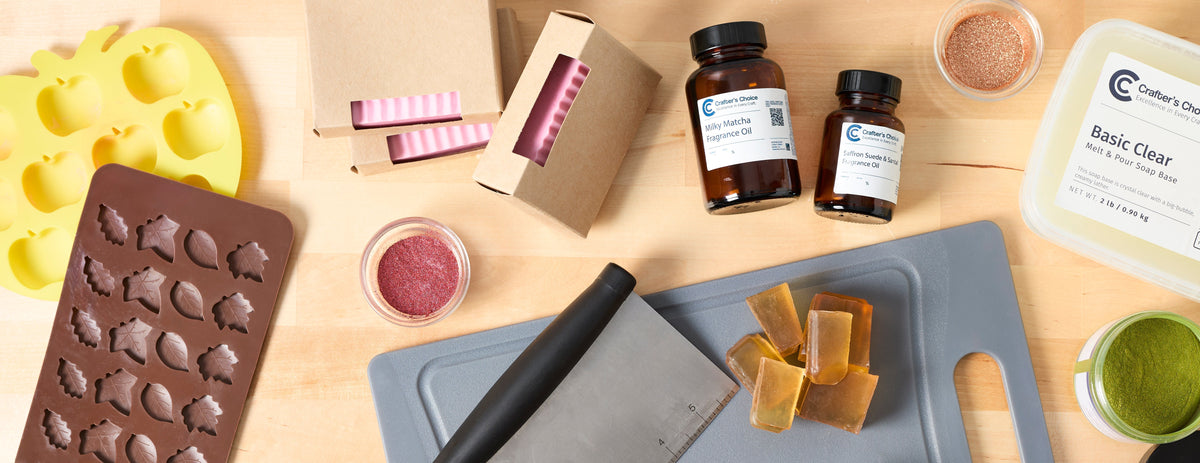
There is no soap without lye. Melt and pour bases are marketed as lye free because the Maker never handles sodium hydroxide directly, but the manufacturer already ran that reaction before the base reached you. Saponification happened upstream, in the production of the melt and pour soap base, not in your workshop.
If you are formulating from scratch, cold process and hot process methods both require measuring lye precisely, since the correct amount depends on the exact oils in your recipe. Get familiar with the fundamentals in our guide to cold process soap making before you build your own formulas.
What is “trace”?
Trace is the visible sign that saponification is underway. As lye and oils react, the mixture thickens and starts to hold a faint pattern when you drizzle some across the surface, similar to thin pudding. Reaching trace confirms the reaction has started, not that it has finished. Saponification continues for hours after you pour the batter into the mold, and it keeps going, more slowly, through the entire cure.
Watching for trace tells you when to add fragrance, colorants, and additives before the batter sets up too firm to pour or swirl. If your batter thickens too fast or will not trace at all, something in the process needs attention, often temperature, an inaccurate lye calculation, or a fast-moving fragrance oil. Our guide to troubleshooting cold process soap covers the most common causes.
Superfat and lye discount: the safety margin
Superfat is the percentage of oil left unreacted on purpose. Most cold process recipes use a 5 percent superfat, meaning the lye is calculated to convert only 95 percent of the oils into soap. That extra oil stays in the bar as a conditioning agent and builds in a safety margin. Formulators also call this a lye discount, the same idea described from the lye side: the calculated lye amount is reduced so oil remains after the reaction, not the reverse.
This is why a properly cured bar contains no free lye. The reaction consumes it, and any residual amount is bound into the chemical structure of the soap, not present as raw sodium hydroxide. That is what makes a fully cured bar safe on skin. Never estimate your lye amount. Run every recipe through a lye calculator before you mix, and weigh ingredients on a scale rather than measuring by volume.
Myth: cured soap is still caustic
This is the most common concern new Makers raise, and it does not hold up. Saponification is a complete chemical reaction, not a mixture of ingredients sitting side by side. Once the reaction finishes and the bar cures for the recommended time, the lye no longer exists as lye. It has become soap and glycerin. A finished, fully cured bar reads in the normal pH range for soap, not caustic, because there is nothing caustic left in it.
SAP values: why every oil needs a different amount of lye
Every oil and butter has a saponification value, or SAP value, the exact amount of lye required to fully convert a given amount of that oil into soap. Coconut oil requires more lye per ounce than olive oil, because the two have different fatty acid profiles. Use the wrong SAP value, or skip the calculation, and the bar ends up either lye heavy and harsh or oil heavy and soft with a shorter shelf life.
Here is what that looks like in practice. Olive oil has a SAP value of about 0.134, so 16 ounces of olive oil needs roughly 2.1 ounces of sodium hydroxide to fully saponify. Coconut oil has a SAP value of about 0.183, so the same 16 ounces needs roughly 2.9 ounces of lye, nearly 40 percent more. Swap one oil for the other without rerunning the numbers, and the entire batch is off.
This is why formulating soap from scratch is as much chemistry as it is craft. A lye calculator applies the correct SAP value for each oil automatically, so you never have to look up or calculate values by hand. Once you understand which oils bring hardness, lather, or conditioning to a bar, you can build recipes with intention instead of trial and error. Our oil and butter properties chart and guide to the best oils for soap making are built for exactly that.
Frequently asked questions
Is there lye in finished soap?
No. Saponification converts lye into soap through a chemical reaction, and a properly formulated, fully cured bar contains no free lye. With an accurate lye calculation and the recommended cure time, sodium hydroxide is fully consumed and is no longer present in its original caustic form.
Can you make soap without lye?
Not from raw oils. Every bar starts with saponification, and lye is the ingredient that drives that reaction. Melt and pour bases are called lye free because the manufacturer already completed the reaction before shipping the base, so you are remolding soap that was saponified previously.
Why does soap need to cure?
Curing lets excess water evaporate, which produces a harder, longer lasting bar. Saponification is typically complete within 24 to 48 hours, but a four to six week cure gives the bar time to lose moisture, mellow, and refine its lather before it reaches your customer.
What is glycerin's role?
Glycerin forms as a natural byproduct whenever lye reacts with oil. It stays in the bar and draws moisture to the skin, which is part of why handmade soap tends to feel more conditioning than mass produced bars that have their glycerin removed during processing.
Formulate with confidence
Saponification is not a mystery to work around. It is the reaction your entire recipe depends on, and understanding it puts you in control of hardness, lather, and safety margin instead of leaving them to chance. Run your recipe through our lye calculator for exact measurements, then shop our oils and lye to start your next batch.