Mango Butter in Soap: Benefits and How to Use It
Mango butter is a light, non-greasy butter that adds hardness and conditioning without weighing a bar down, and it suits every skin type. It runs roughly 38 to 50% oleic acid and 30 to 50% stearic acid, giving it both structure and conditioning. Most formulators use mango butter at 5 to 15% of total oils. Compared to shea, mango is lighter and firmer, so the two butters solve different problems in a recipe.
Mango butter brings hardness and conditioning to a soap recipe without the heaviness some butters carry. Pressed from mango seed kernels, it melts the moment it touches skin, so it never leaves a greasy residue on the finished bar. For Makers building a line that needs to perform in the mold and hold up on the shelf, mango butter delivers both.
This guide covers what mango butter is, what it does for skin, how to use it in a soap formula, and how it compares to shea butter so you can choose the right one for your next batch.
What Is Mango Butter?
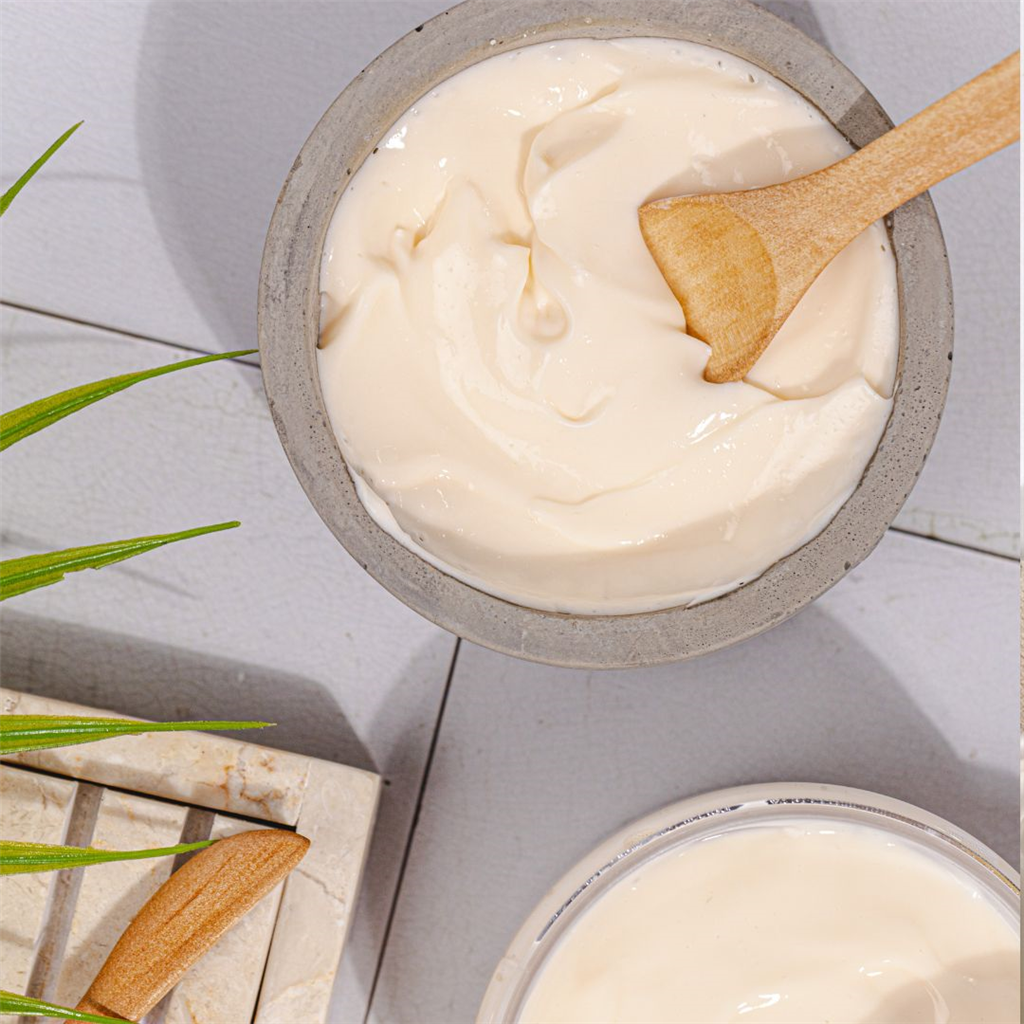
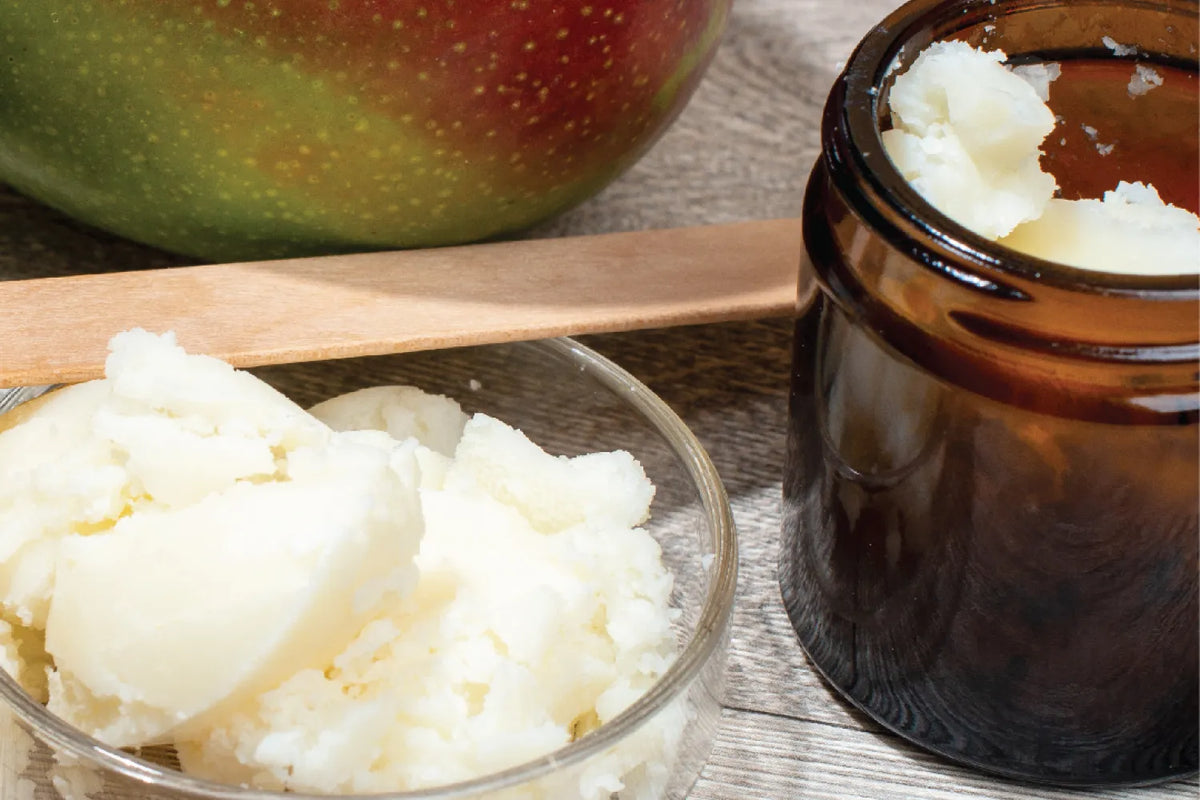
Mango butter comes from the kernel inside a mango seed. Producers press or extract the kernel, then refine it into a firm, pale butter that holds its shape at room temperature. Most of the mango butter used in soap making is sourced from India and parts of West Africa, where mango seeds are a byproduct of fruit processing.
Mango butter has a melting point around 89 to 97 degrees Fahrenheit, close to body temperature. That is why it stays solid on the shelf yet melts the instant it meets skin. In a soap bar, that same firmness translates directly into a harder finished product, one reason formulators reach for it in bars meant to hold up in daily use and last through a full lather cycle.
Refined mango butter carries almost no scent and a stable shelf life, which makes it easy to layer with fragrance oils and store between batches without the base going off. Unrefined mango butter keeps more of its natural character but brings a faint nutty scent and color that shifts from batch to batch, which most Makers building a consistent retail line prefer to avoid.
Mango Butter Benefits for Skin
Mango butter is lightweight and non-greasy, and it suits all skin types, including skin prone to breakouts. It absorbs quickly rather than sitting on the surface, so a finished bar feels conditioning without feeling heavy.
The fatty acid profile explains why. Oleic acid keeps the butter conditioning, while the stearic and palmitic share adds firmness and helps a soap bar hold its structure. That balance also helps mango butter reduce moisture loss through the skin, supporting the skin barrier instead of just coating it. Mango butter also carries natural vitamin E, which adds a mild antioxidant boost and supports the butter's own shelf stability.
Mango butter has also long been valued for a calming, soothing feel on skin, which is part of why it shows up in recipes built for sensitive skin and baby care lines. And its neutral color and scent leave fragrance and colorants free to perform as designed, with nothing competing against them.
What Mango Butter Does in Soap
In a soap recipe, mango butter adds hardness and conditioning at the same time, plus a creamy feel that avoids the heaviness some richer butters bring. That makes it a strong choice for bars where you want a longer lasting product that still feels good on skin from the first use.
Because it is firm at room temperature, mango butter contributes to a harder bar and can support a faster, more confident unmold in cold process work. It performs just as well melted into a melt and pour base, where its light finish keeps the bar from feeling greasy in the mold or on skin. Melt it gently and add it at trace along with your other oils. Overheating can stress the butter and dull the smooth feel that makes it worth using in the first place.
Combine that firmness with its conditioning fatty acid profile and you get a butter that pulls double duty, structure for you, comfort for your customer. That dual role also gives you something to market. Lightweight and non-greasy is a claim customers understand and look for, especially buyers who have tried richer butters and found them too heavy for daily use. Adding mango butter to a line lets you reach that customer without reformulating your entire recipe.
If you are mapping out a full recipe, our guide to the best oils & butters for soap making and our properties chart both break down how mango butter performs alongside other common bases.
How Much Mango Butter to Use
Most formulators use mango butter at 5 to 15% of total oils. Treat it as a luxury or superfat addition rather than the base of your recipe. That range is enough to deliver noticeable hardness and conditioning without pushing the bar toward greasy or slow to lather.
For a 32 ounce batch of oils, 10% mango butter works out to about 3.2 ounces, a useful starting point to scale up or down as you dial in a recipe. If you are new to formulating with mango butter, start at the lower end of the range and adjust batch to batch based on how the bar performs in your mold and on skin. Pushing well past 15% can soften a bar's lather and slow trace in cold process work, so treat higher percentages as a deliberate formulation choice rather than a default.
For step by step formulating guidance, see our guide to cold process soap making and our guide to choosing a melt & pour soap base if you are working with a pre made base instead.
Mango Butter vs Shea Butter
Mango butter and shea butter both condition skin, but they solve different problems in a recipe. Mango butter is lighter and firmer, which makes it a strong pick when you want added hardness without extra richness. Shea butter is richer and softer, better suited to a recipe built around a heavier, more emollient feel. Refined mango butter is also virtually scent free, while unrefined shea carries a natural nutty note that some fragrance heavy recipes need to work around.
Neither butter is the better choice across the board. The right pick depends on the finished product you are building. For bars where hardness and a clean, quick absorbing finish matter most, reach for mango. For bars built around a richer, more cushioned feel, shea butter is the stronger fit. Many formulators use both in the same recipe, leaning on mango for structure and shea for richness, so the two butters end up complementing each other rather than competing.
Our full breakdown of shea butter in soap and cocoa butter vs shea butter for soap can help you decide which butter, or combination, fits your recipe and your customer.
For a business built on repeat customers, mango butter offers something valuable: a butter you can formulate with confidently, batch after batch. Its stable supply, neutral scent, and predictable performance make it easy to keep a recipe consistent as your line grows, which matters as much for your margins as it does for your customers.
FAQ
Is mango butter good for soap?
Yes. Mango butter adds hardness and conditioning to a soap recipe without leaving a greasy feel. It suits all skin types and pairs well with a wide range of oils and fragrances, which makes it a reliable addition for bars built for daily use.
How much mango butter should I use in soap?
Use mango butter at about 5 to 15% of your total oils. That range delivers noticeable hardness and conditioning while keeping the bar's lather and feel in balance. Start around 5% if you are testing it in a recipe for the first time.
Mango butter vs shea butter, which is better?
Neither is universally better. Mango butter is lighter and firmer, ideal for added hardness. Shea butter is richer and softer, ideal for a more emollient feel. Choose based on the finished product you want or combine both for a balanced result in the same bar.
Is mango butter greasy in soap?
No. Mango butter absorbs quickly and leaves a non-greasy finish, one of the main reasons formulators use it. Its fatty acid profile supports conditioning without the heavy residue some richer butters can leave behind.
Shop Mango Butter
Ready to formulate with mango butter? Shop mango butter and browse our full selection of soap making butters to find the right combination for your next batch.